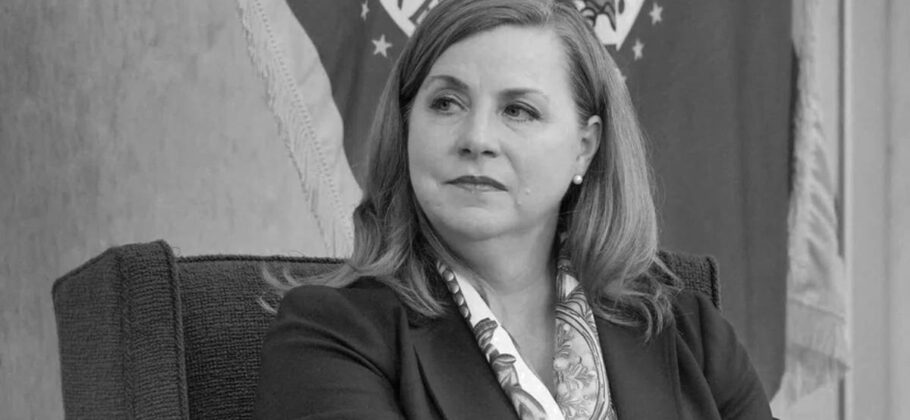
Federal Reserve Vice Chair for Supervision Michelle Bowman delivered a notable speech on January 16, 2026, at the Outlook 26: The New England Economic Forum in Foxborough, Massachusetts, signaling a potentially more accommodative stance on monetary policy amid emerging concerns over the U.S. labor market. Traditionally regarded as one of the Fed’s more hawkish voices—cautious about easing too aggressively—Bowman emphasized that the central bank must remain prepared to lower interest rates further if job market conditions show signs of meaningful deterioration.
In her prepared remarks, Bowman described the current federal funds rate, which stands in the 3.50%–3.75% range following a series of cuts totaling 175 basis points since September 2024, as still “moderately restrictive.” This characterization implies that policy continues to exert some drag on economic activity, even after the easing cycle that began late in the previous year. She argued that absent a clear and sustained improvement in labor market indicators, the Federal Open Market Committee (FOMC) should stand ready to adjust policy to bring it closer to a neutral level—one that neither significantly stimulates nor restrains growth.
Bowman highlighted the growing “fragility” in employment conditions, noting that the labor market “has become increasingly more fragile and could continue to deteriorate in the coming months.” She cautioned that job market stability can appear solid on the surface until it suddenly weakens, underscoring the importance of a forward-looking, preemptive approach to support the Fed’s maximum employment mandate. “The labor market can appear to be stable right up until it doesn’t,” she warned, advocating for proactive measures to stabilize and bolster employment rather than waiting for clearer evidence of distress.
This focus on employment risks contrasts with the more cautious outlook embedded in the FOMC’s December 2025 Summary of Economic Projections, where officials penciled in just one additional quarter-percentage-point rate cut for the entirety of 2026. That projection reflected optimism that inflation would continue moderating, the job market would hold steady near full employment, and overall economic growth would remain respectable despite uncertainties stemming from President Donald Trump’s trade policies and tariffs.
On the inflation front, Bowman expressed increased confidence that price pressures are on a “sustained trajectory” toward the Fed’s 2% longer-run target. She acknowledged that inflation had been a primary concern through much of 2025 but noted clearer signs of slowing economic growth and labor market softening that shifted her perspective. Importantly, she downplayed the risk of persistent inflationary effects from recent tariff initiatives, characterizing them as likely “one-off” rather than enduring drivers of price increases.
Bowman’s remarks also touched on the need for data-dependent decision-making informed by a wide array of indicators, including ongoing engagement with businesses and communities nationwide. She explicitly advised against prematurely signaling a pause in rate reductions, stating that monetary policy is not on a preset course and that officials should avoid committing to a halt “without identifying that conditions have changed.”
Her comments have sparked discussion about internal Fed dynamics entering 2026. While the December projections suggested a limited easing path, Bowman’s dovish tilt—particularly her emphasis on labor risks over inflation threats—could influence market expectations and challenge the consensus for restraint. Financial markets reacted with some softening in short-term Treasury yields, though longer-term rates remained elevated amid broader uncertainties, including the impending expiration of Chair Jerome Powell’s term in May 2026 and potential shifts in leadership that might favor even lower rates.
Overall, Bowman’s address reinforces the Fed’s commitment to its dual mandate of price stability and maximum employment in a complex environment. By prioritizing the downside risks to jobs while acknowledging progress on inflation, she advocates for policy flexibility: the central bank will closely monitor incoming data on hiring, unemployment, wage growth, and broader economic activity. If fragility in the labor market intensifies, further rate adjustments could materialize sooner and more aggressively than currently anticipated, aiming to prevent a sharper downturn while safeguarding the hard-won gains in bringing inflation back toward target. This balanced yet vigilant approach underscores the challenges the Fed faces in navigating a post-pandemic economy shaped by policy shifts, trade tensions, and evolving labor dynamics.