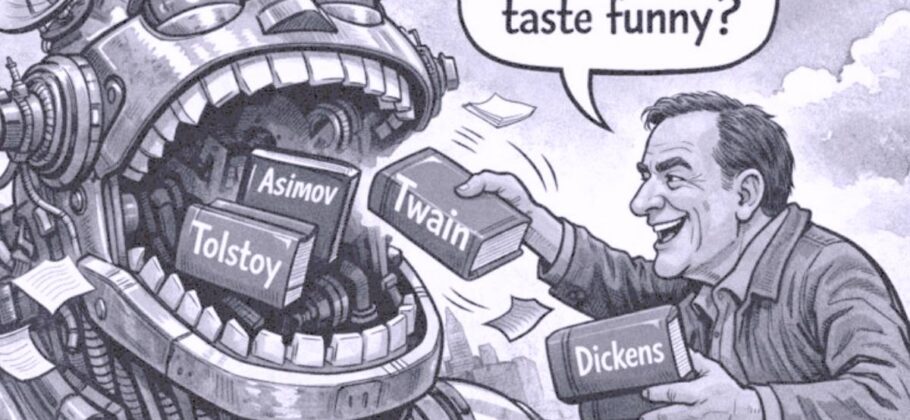
A new wave of lawsuits is hitting some of the world’s biggest artificial intelligence developers, as a group of well-known authors accuse tech companies of stealing their copyrighted books to build powerful AI systems. Leading the charge is New York Times investigative reporter John Carreyrou, best known for exposing the Theranos scandal and writing the bestselling book “Bad Blood.” Alongside five other writers, he has filed lawsuits against Anthropic, Google, OpenAI, Meta, Elon Musk’s xAI, and Perplexity.
The plaintiffs include journalists, academics, and nonfiction writers whose work ranges from political analysis to technology guidance. Besides Carreyrou, the named writers include Lisa Barretta, Philip Shishkin, Jane Adams, Matthew Sack, and Michael Kochin. They argue that AI companies copied their books from pirate websites such as LibGen, Z-Library, and OceanofPDF, then fed those texts into massive language models without permission, payment, or licensing. The authors say their work is valuable, that books are considered the gold standard of training data, and that companies are now earning enormous profits based on stolen intellectual property.
The Legal Basis of the Lawsuit
The writers claim direct copyright infringement. Their central argument is that even if a court considers AI training potentially legal, downloading pirated books and using them without authorization is clearly unlawful. They point to earlier rulings, including one involving Anthropic, where a judge noted that while model training might be defensible, the act of obtaining millions of books illegally was not. The new suits seek statutory damages that could reach up to $150,000 per infringed work per defendant, far beyond what prior settlements offered.
Earlier this year Anthropic agreed to a settlement of about $1.5 billion. Eligible writers in that case would receive around $3,000. The plaintiffs in the new lawsuit argue this payout barely scratches the surface of the financial harm caused. They say class actions mainly benefit corporations by allowing them to eliminate thousands of claims at “bargain-basement rates” instead of truly compensating creators. In their words, prior deals appear to serve AI companies more than the writers whose work was allegedly taken.
Supporters of the lawsuit argue that authors deserve meaningful compensation and respect for their intellectual property. They stress that AI companies built systems worth hundreds of billions of dollars on top of creative work they did not pay for. John Carreyrou has even described this behavior as AI companies committing an “original sin” by building their products on stolen material and then attempting to walk away with minimal consequences.
Public responses have been limited so far. Perplexity insists that it does not index books. xAI reportedly sent an email dismissing media reports as “Legacy Media Lies.” In general, AI companies have suggested in past cases that training on text can fall under legal allowances, though judges have made clear that acquiring materials illegally is another issue entirely. Some companies, including Anthropic, have chosen to settle rather than fight every claim in court.
A History of Authors Fighting Tech
This is not the first time creative industries have clashed with new technology. Commentators note that publishers and media companies have historically challenged new platforms, from radio to television to the internet and now AI. Perplexity’s communications head even joked that if earlier lawsuits had fully succeeded, people today might still be communicating by telegraph. At the same time, courts previously ruled that Anthropic may have illegally downloaded as many as 7 million books, showing that judges are taking these concerns seriously.
Industry observers say this moment could help define how AI develops in the future. Some believe lawsuits like this are necessary to ensure tech companies respect copyright law instead of exploiting creators. Others argue that innovation will continue regardless of legal battles, since similar disputes have appeared in every major technological shift. Meanwhile, separate conflicts continue, including The New York Times suing Perplexity for allegedly copying and republishing news content, and Disney warning Google to stop AI systems from using and generating material tied to its intellectual property.
No preliminary hearing date has been set yet, but the stakes are high. Authors are determined not to be pushed aside by powerful corporations, while AI developers want freedom to keep improving their systems. Whether courts side more strongly with creators or with technology companies may determine how much control and compensation writers receive in an AI-powered world.